
When planning ceases to be a risk and redefines InterCement's performance
InterCement transformed its S&OP with Pyplan, integrating demand, supply and costs to decide with greater precision and profitability.
A capital-intensive business that requires millimetric decisions
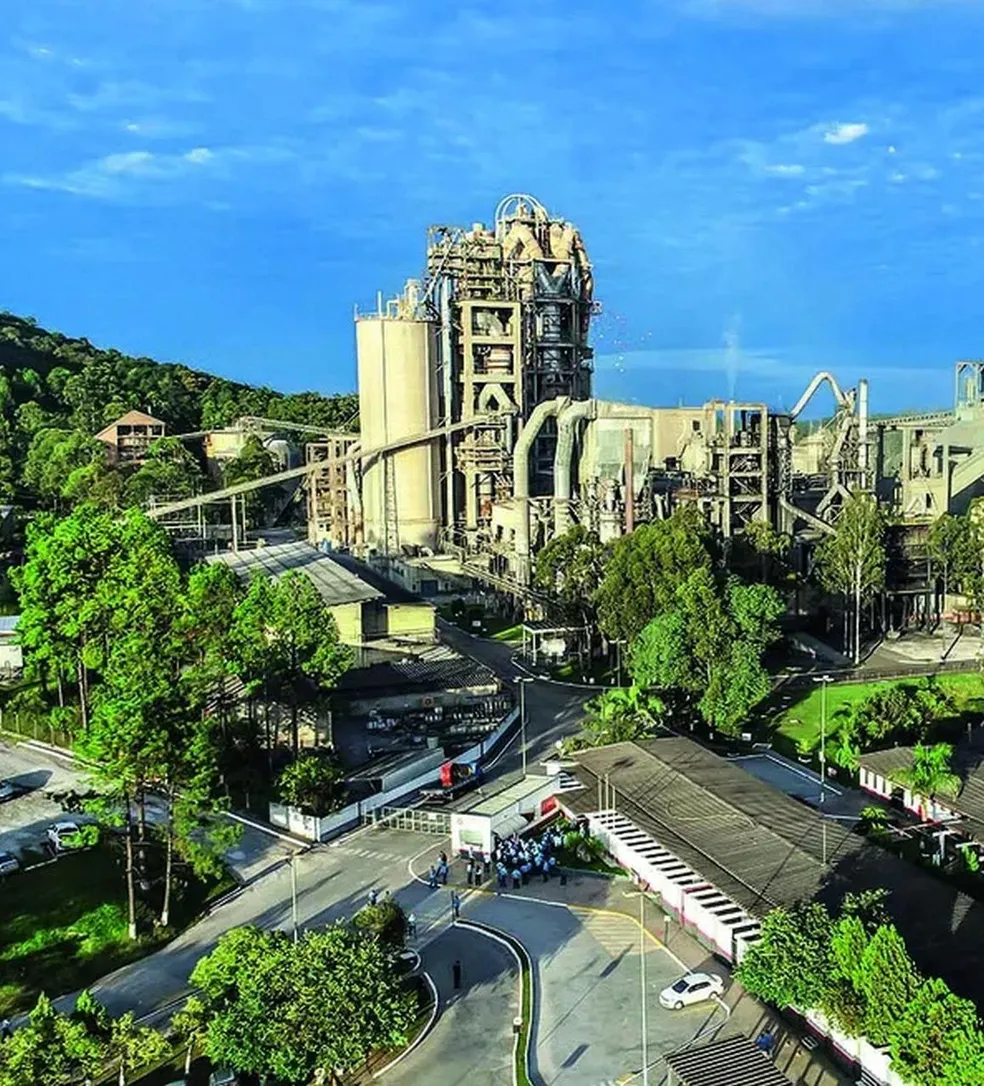
The construction sector is characterized by high capital intensity, demand sensitive to economic cycles and a complex production and distribution network. In this context, InterCement operates with multiple plants, distribution centers and a massive and highly distributed sales flow throughout Brazil.
Before the project, demand planning and the process of S&OP relied heavily on spreadsheets and manual processes. Forecasts were made in aggregated form, based mainly on historical trends, with low granularity by product and region. Information was fragmented between areas, leading to reprocesses, inconsistencies and a high operational effort to consolidate scenarios.
This lack of integration had a direct impact on business results: reduced planning accuracy, overstock or shortage risks, difficulties in evaluating real margins, and a limited capacity to react quickly to changes in demand or logistics costs.
From planning in parts to orchestrating the chain from end to end
To keep up with the scale of the business and reduce the loss of value associated with poorly integrated decisions, InterCement needed to transform its planning process. The objective was clear: to build a single tool that would reproduce the company's entire monthly planning cycle, integrating demand, supply, costs and monitoring into a consistent model.
The project involved key processes such as Demand Planning and S&OP, with a strong need to connect business planning with productive capacity, distribution and logistics costs. It was critical to be able to evaluate scenarios quickly, compare alternatives and collaborate between areas without relying on manual information exchanges.
In addition, the business required advanced capabilities to optimize the demand-production ratio, considering the geographical dispersion of both consumption and plants, and to project logistics costs even on routes with no previous history.
Pyplan as an engine for integrated and cost-effective planning
The solution developed by Novix on the Pyplan platform allowed InterCement to digitize and unify its entire Demand Planning and S&OP process. The implementation was carried out sequentially, incorporating Demand, Supply, Logistics Costs, Monitoring and Demand Optimization modules, all integrated into a single flexible and scalable model.
In demand planning, Pyplan combined Top Down and Bottom Up approaches, incorporating statistical and artificial intelligence models by product and region, and enabling direct collaboration with business areas. This made it possible to substantially improve the assertiveness of the forecasts and gain granularity without increasing operational complexity.
At the supply level, the platform integrated information on the efficiency of furnaces and mills, scheduled shutdowns and clinker needs, connecting production capacity with projected demand. In parallel, the logistics cost module made it possible to build freight curves and project costs by origin and destination, even in scenarios without historical movements.
Using advanced models, scenario simulation and analysis automation, InterCement moved from a reactive approach to a predictive and prescriptive approach. The company managed to drastically reduce the execution time of scenarios, optimize revenues and cash margin, and improve the visibility of information for all the teams involved. The planning process ceased to be an operational exercise to become a true strategic decision tool for the business
Discover how Pyplan can transform your planning process and turn it into a real competitive advantage. Learn about our solutions or talk to an expert:
👉 https://pyplan.com/es/entre-en-contacto/

You might also be interested

Data governance for planning with confidence
Control, traceability and consistency in each Bajada number

Modeling the business, not just the numbers
How Pyplan's influence diagrams transform complex rules into clear decisions
Preparing data for better planning
Quality, structure and scalability from the first model
See Pyplan in action
we will get in touch with you!